
Shopping Cart
Post author: Cacauwe
Publication date: 29/09/2026
What bronze, palm wood and bone change about a ceremonial pipe, what the inlaid stones are, and how to clean and store one.
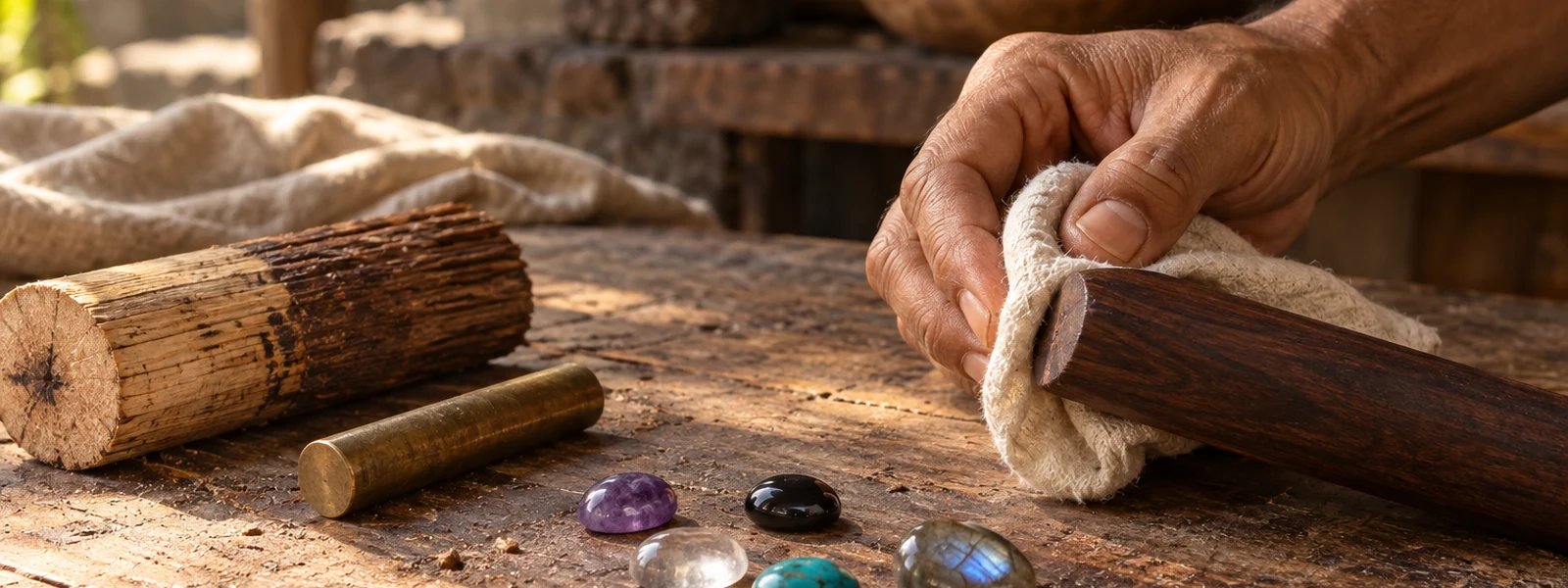
Illustration generated with AI
A ceremonial pipe is a tool, and the material it is made from changes how it behaves. Here is what the differences actually are, without the mysticism.
Materials
- Bronze and brass. Heavy in the hand, cool to hold, and they last indefinitely. Plating — gold or silver over bronze — is cosmetic and will wear at the contact points over years. That wear is normal and most people come to like it.
- Palm wood and hardwood. Light, warm, and they take on the smell of what has been used in them. Wood is porous, so it will change with use. It is also the material that needs the most care.
- Bone and horn. Traditional, very light, and sensitive to heat and to being left wet. Handsome, but the least forgiving.
The stones
Inlays are usually amethyst, onyx, clear quartz, turquoise or labradorite. They are set into the body and are decorative — they do not touch what passes through the pipe. What matters practically is that stone is brittle: a pipe with a large inlay should not be carried loose in a bag, and a dropped pipe usually loses its stone before it loses anything else.
Applicators are a different object
A kuripe is a self-applicator, V-shaped, used on yourself. A tepi is longer and straight, used by one person on another. They are not interchangeable and the difference is not stylistic — the angle and the length are what make each one work.
Cleaning
- Metal: warm water, no detergent, dry immediately and thoroughly. A pipe cleaner through the bore after each use keeps residue from hardening.
- Wood: dry brush or a dry pipe cleaner only. Do not soak wood — it swells, and it can split as it dries. A little food-grade oil once or twice a year keeps it from drying out.
- Bone: wipe dry, never soak, keep away from direct heat.
Storage
A cloth pouch, out of direct sun, somewhere that does not swing between hot and cold. Wood splits from humidity changes more often than from use.
Handmade means variable
These are made by hand one at a time. Grain, tone, the exact placement of an inlay and the finish will differ from the photograph. That is the nature of the object, not a fault.
The range is in Ceremonial Pipes.
Frequently asked questions
Do the stone inlays touch what passes through the pipe?
They are set into the body and are decorative — they do not touch what passes through the pipe.
How do I clean a wooden pipe?
Wood: dry brush or a dry pipe cleaner only. Do not soak wood — it swells, and it can split as it dries.
Why does my pipe differ from the photograph?
Grain, tone, the exact placement of an inlay and the finish will differ from the photograph.