Shopping Cart

Post author: Cacauwe
Publication date: 29/09/2026
Length, hood, pockets and print: what to look at when choosing a cotton kimono, and four ways to wear one, from yoga class to an evening ceremony.
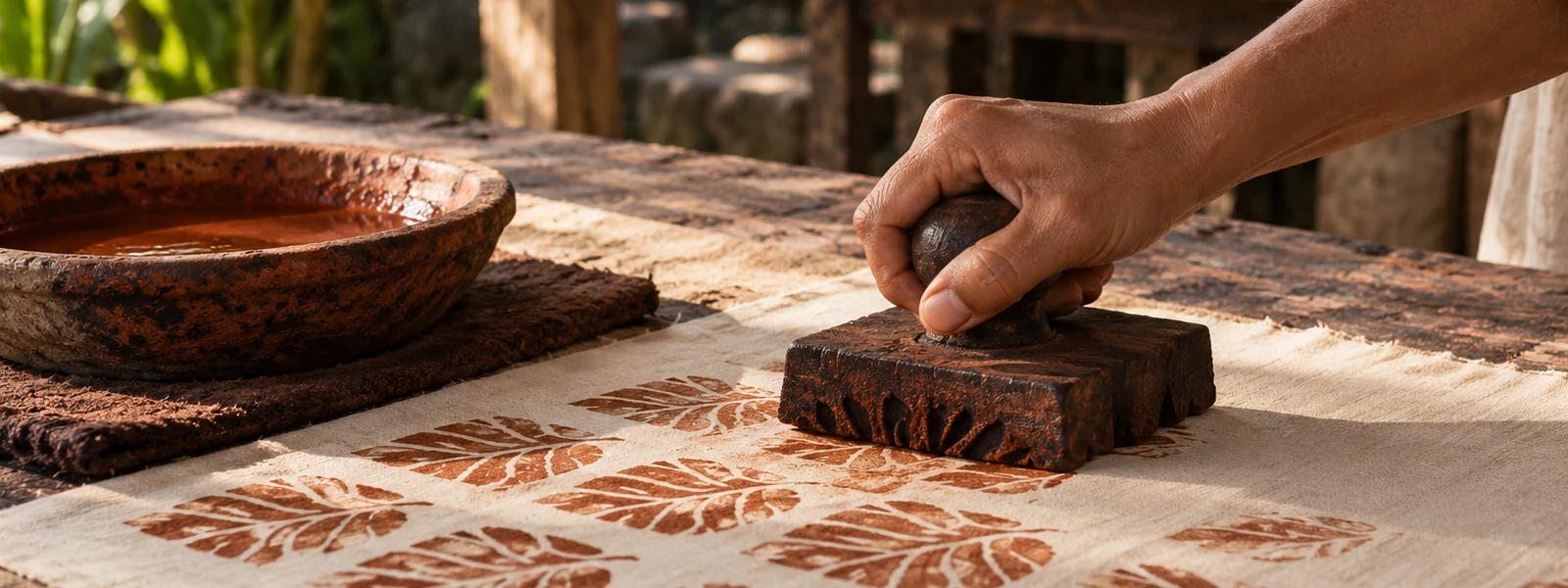
Illustration generated with AI
A kimono is the simplest piece of clothing you can own. It is a length of cloth with sleeves, open at the front, closed with a belt or left to hang. That simplicity is why it works in so many places: over a yoga top on the way to class, over a dress at a gathering, around the shoulders when the fire burns low at a ceremony.
The kimonos we carry are not the formal silk garments of Japan. They are loose cotton pieces cut in the same spirit, made to be worn often and without fuss. Here is what to look at when choosing one, and how to wear it once it is yours.
Quick answer
If you are buying your first kimono, choose a mid-length one in a colour you already wear, with pockets and a belt.
Length changes the whole character of a kimono.
A short kimono, ending at the hip, behaves like a light jacket. It sits well over trousers and harem pants.
A mid-length kimono, ending around the knee, is the most versatile. It covers enough to feel wrapped, but it still moves with your stride.
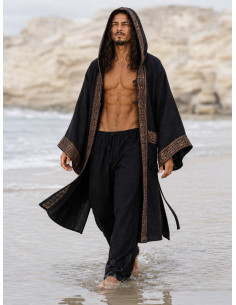
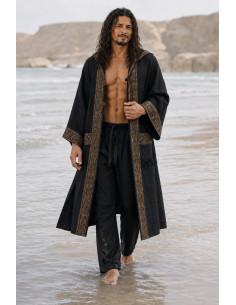
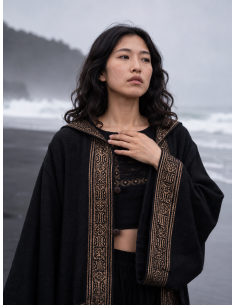
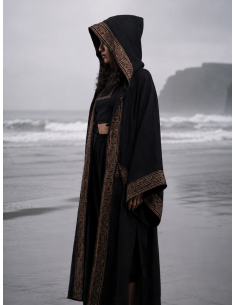
A long kimono, reaching mid-calf, is the one that turns heads. Several of ours, such as the Kairos, fall to mid-calf. Worn open it flows behind you as you walk; belted, it reads almost as a dress.
If you are unsure, pick the length by where you will wear it most. Mid-length suits a studio or a market, long suits a ceremony or an evening outside.
Some of our kimonos have an oversized hood. It is more useful than it looks. At a morning practice or a night outdoors, pulling the hood up keeps the wind off your neck and gives you a small private space to settle into. Down, it lies across the shoulders like a wide collar.
Look for pockets. Many of our kimonos have them, set at the hip where your hands fall. They hold a phone, a lighter for incense or a folded note, and they give you somewhere to rest your hands when you stand and listen.
Most come with a tie belt in the same cloth. The belt is what lets one kimono become several garments, as you will see below.
Most of our kimonos are one size. The cut is loose by design: the body is wide, the sleeves are open, and the front overlaps as much or as little as you want. The fit is set by how you tie it, not by a number on a label.
Check before you buy
If you are tall, check the length in centimetres on the product page, because a mid-calf kimono on one person may be knee-length on another. If a piece has size options, the product page lists them.
Almost every kimono we sell is cotton. Cotton breathes, softens with washing and does not cling when you are warm.
Many are hand block printed. The pattern is pressed into the cloth one carved wooden block at a time, so the repeat is never perfectly even. A slight shift in a line, or a patch where the ink sat heavier, is the mark of the hand, not a flaw.
Some are naturally dyed in earthy colours. Earthy colours sit well together, which makes a naturally dyed kimono an easy piece to build around.
1. Open, over a top and pants. The everyday way. Wear it loose over a vest and harem pants and let the front hang. Nothing to tie, nothing to adjust.
2. Belted at the waist. Close the front and tie the belt at your natural waist. The kimono takes on a shape, and a long one becomes a coat.
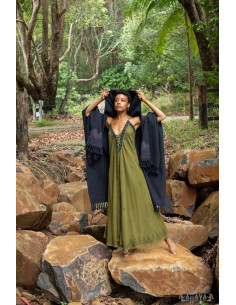
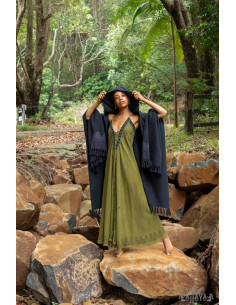
3. As a wrap dress. Some of our kimonos are cut to be worn as a wrap dress. Cross the front deeply, tie the belt firmly at the side, and wear it on its own or over a slip. The product page says when a kimono can be worn this way.
4. Hood up, for sitting. At a ceremony or a long meditation, pull the hood up and let the kimono fall around your crossed legs. It becomes a layer to sit inside.
We keep women's kimonos and men's kimonos in separate categories so each is easy to browse. The idea is the same in both. A loose cotton layer, open at the front, that you can put on in a moment and forget you are wearing.
Cotton kimonos, and block printed ones above all, last longer with a little care: cool water, gentle washing, drying in the shade. We have written a separate guide to caring for a kimono if you want the detail.
If you are buying your first kimono, choose a mid-length one in a colour you already wear, with pockets and a belt. If you already have one, try the other end of the range: a long, hooded kimono for evenings, or a short one for the studio.
Browse the women's kimonos and the men's kimonos to see the lengths, prints and colours we have now.
If you are unsure, pick the length by where you will wear it most. Mid-length suits a studio or a market, long suits a ceremony or an evening outside.
Most of our kimonos are one size. If a piece has size options, the product page lists them.
A slight shift in a line, or a patch where the ink sat heavier, is the mark of the hand, not a flaw.
Some of our kimonos are cut to be worn as a wrap dress. The product page says when a kimono can be worn this way.