Shopping Cart



Post author: Cacauwe
Publication date: 29/09/2026
How to wash a hand-block printed or rayon kimono without fading it, how to dry and store it, and what to do when the dye bleeds.
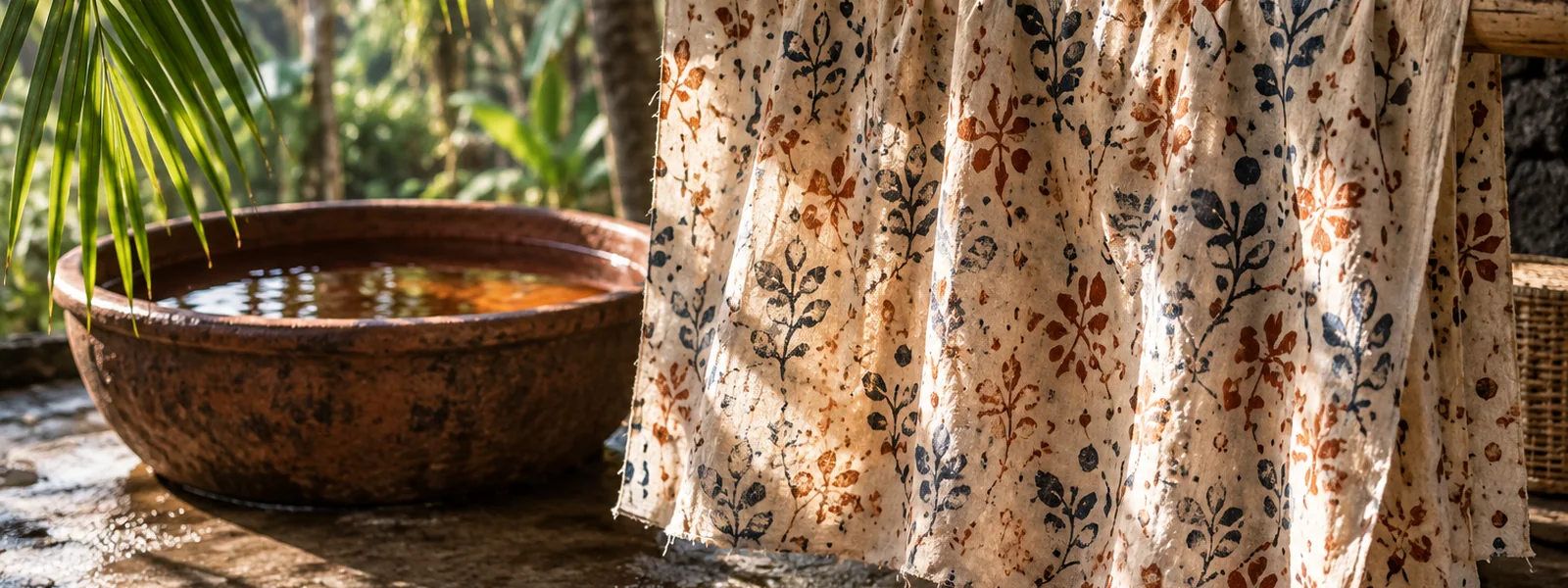
Illustration generated with AI
A hand-block printed kimono is dyed with pigment sitting on the surface of the cloth, not driven into the fibre by a machine. That is why the colours are deep and slightly irregular, and also why the first wash decides how it will look for the rest of its life.
Quick answer
Wash it alone, by hand, in cold water, with no detergent at all — or a teaspoon of white vinegar, which helps set the dye. Line dry in shade.
Wash it alone, by hand, in cold water, with no detergent at all — or a teaspoon of white vinegar, which helps set the dye. Expect colour in the water. That is loose surface pigment and it is normal; it is not the garment falling apart. Do not soak it for more than a few minutes, because pigment that has left the cloth will happily settle back on a pale area.
Line dry in shade. Sunlight fades plant and pigment dyes faster than washing does, and a single afternoon on a bright line can take the edge off a colour permanently. Hang from the shoulders on a wide hanger, not folded over a line, so the weight of the water does not stretch a crease into the cloth.
Tumble drying shrinks cotton and can make rayon brittle. If you must iron, iron inside out on a medium setting, and never directly on a printed area.
Hang it if you have room. Folded for months, a printed fold line can set. Cotton needs to breathe, so no plastic covers — a cloth bag is better. If you are storing it for a season, make sure it is completely dry first; damp cotton in a cupboard grows mould that does not come out.
Rinse the affected garment in cold water immediately, before it dries. Heat sets a stain permanently, so do not put it in a dryer or an iron until the mark is gone.
Women's kimonos are in Women's Kimonos and men's in Men's Kimonos.
Expect colour in the water. That is loose surface pigment and it is normal; it is not the garment falling apart.
Tumble drying shrinks cotton and can make rayon brittle.
If you must iron, iron inside out on a medium setting, and never directly on a printed area.
Rinse the affected garment in cold water immediately, before it dries. Heat sets a stain permanently, so do not put it in a dryer or an iron until the mark is gone.